You know, as the field of kidney care keeps growing, the need for top-notch medical devices is more important than ever. One key piece of equipment in this realm is the Peritoneal Dialysis Catheter. If you're looking at suppliers for these, it's pretty clear they’ve got to meet some pretty strict standards — gotta make sure patient safety’s a priority and the treatment actually works, right?
Interestingly, China’s really stepped up its game in the global market when it comes to these catheters. There are quite a few companies recognized for their know-how in manufacturing and supplying these crucial devices. Their focus on quality and innovation has helped them become real contenders on the international stage. But, of course, there are still some hurdles — things like maintaining consistent quality and keeping up with international standards can be tricky.
If you're thinking about buying, it’s a good idea to dig into each supplier’s background—look at their experience and how reliable they are. Some companies shine when it comes to technical know-how, but they might not offer much in terms of support or after-sales service. Spotting these differences is super important if you want to pick the right Peritoneal Dialysis Catheter supplier. Honestly, navigating this whole landscape takes some careful research and patience — it’s not always straightforward, but in the end, it’s worth it.
China has established a strong foothold in the global peritoneal dialysis catheter market. Recent industry reports indicate that China accounts for over 40% of the worldwide supply of medical catheters. The country has emerged as a leading player, attracting attention from global buyers seeking quality and affordability. This growth is partly due to significant investment in manufacturing capabilities and innovative healthcare solutions.
The demand for peritoneal dialysis catheters, including the widely used Peritoneal Dialysis Catheter 16f, continues to rise. An estimated 2.6 million patients worldwide rely on this treatment annually. Yet, while Chinese suppliers excel in production volume, quality consistency remains a challenge. Some reviews suggest discrepancies in catheter performance across different batches. These quality issues raise concerns for healthcare providers, emphasizing the need for rigorous quality control.
Moreover, China’s dominance also raises questions about dependence on a single supply source. As healthcare systems worldwide grapple with sustainability, diversifying suppliers could mitigate risks. Trends show increasing competition from emerging markets, pushing China to improve not only efficiency but also transparency in manufacturing practices. Balancing these aspects will be crucial for China to maintain its leading position in the peritoneal dialysis catheter market.
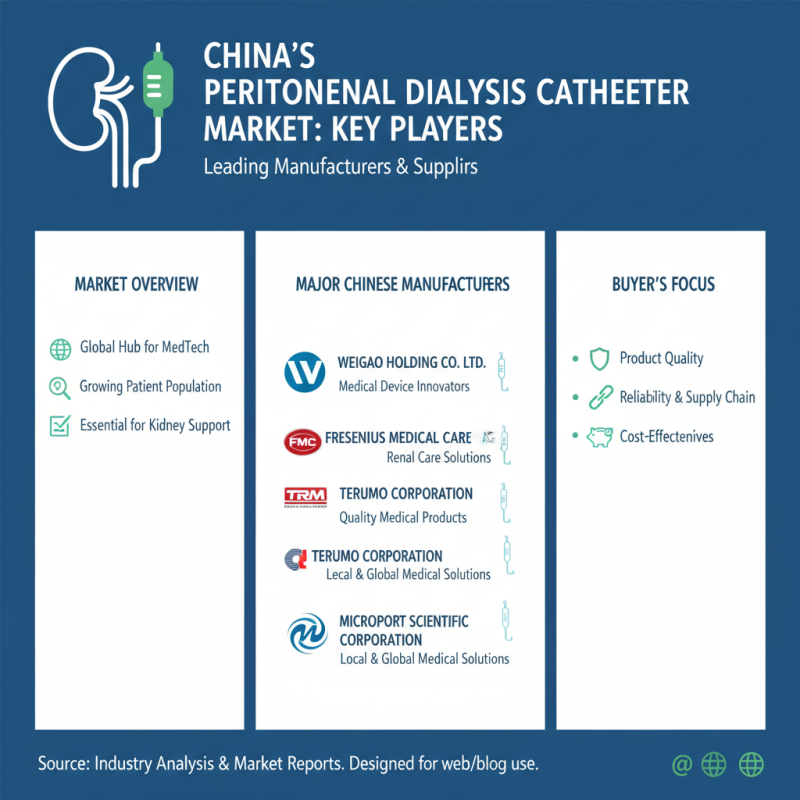
China has emerged as a significant player in the peritoneal dialysis market. The country is home to various manufacturers that specialize in peritoneal dialysis catheters. These devices are essential for patients who rely on peritoneal dialysis for kidney function support. Understanding the market dynamics and key suppliers is crucial for buyers.
When searching for a Peritoneal Dialysis Catheter Set, consider the quality and safety standards. Many Chinese suppliers prioritize international certifications, ensuring reliability. However, buyers should not overlook the importance of evaluating supplier capabilities. Engaging in discussions about their production processes can reveal insights into their operational excellence.
Tips: Always request documentation regarding sterilization processes. Independent reviews can provide clarity on product performance. It is wise to compare multiple suppliers. This allows you to assess quality while also finding competitive pricing. Don't hesitate to ask questions that clarify any uncertainties regarding product details.
China's peritoneal dialysis market is witnessing substantial growth. The increasing demand for renal care fuels this expansion. A rise in kidney-related illnesses contributes significantly to this trend. Patients increasingly prefer peritoneal dialysis as it allows for greater independence. Consequently, manufacturers focus on enhancing product quality and accessibility.
Innovative designs in the Peritoneal Dialysis Catheter Kit are emerging. Companies emphasize comfort and ease of use. However, the market faces challenges like varying quality standards. Not all suppliers maintain controllable manufacturing processes. This inconsistency raises concerns among potential buyers.
Moreover, while China's market shows potential, it is essential to assess reliability. Understanding regulatory compliance is crucial for global buyers. Many companies lack transparency regarding their manufacturing practices. Ensuring that suppliers adhere to strict guidelines remains a priority. This approach helps buyers make informed choices in a rapidly changing landscape.
The production of peritoneal dialysis catheters in China adheres to strict quality standards and regulatory compliance. Chinese manufacturers have invested significantly in research and development. They aim to meet international quality benchmarks set by health organizations. This focus has made them a trusted source for global buyers.
Understanding the regulatory landscape is crucial. Compliance with international standards like ISO and CE certification ensures safety and efficacy. These certifications indicate that the products have passed rigorous testing. Manufacturers must consistently verify materials and processes to avoid costly errors.
**Tips:** Always check for certifications before purchasing catheters. Engage with suppliers who transparently share their compliance records. Keeping informed about the latest regulations can also guide better purchasing decisions.
The field of peritoneal dialysis is rapidly evolving, especially in China. Innovations in peritoneal dialysis catheters reflect years of research and development. These advancements aim to address specific challenges faced by patients, including infection rates and catheter longevity. Chinese suppliers are becoming vital players in the global healthcare market.
Recent designs feature advanced materials that minimize infection risks. Lightweight catheter systems improve patient comfort and ease of insertion. These innovations are critical as patients often require long-term dialysis treatments. However, there’s still a need for ongoing improvements. Understanding individual patient requirements is essential for optimum catheter performance.
**Tips:** Always consult healthcare professionals when choosing catheters. Individual needs vary widely, and expert guidance ensures the best fit. Consider patient experiences during the selection process. Innovations are helpful, but always reflect on their practical application. Explore newer models available in the market to find efficient solutions for Peritoneal Dialysis Catheter Acute challenges.
| Dimension | Value |
|---|---|
| Global Market Share (%) | 25% |
| Annual Production Capacity (Units) | 500,000 |
| Export Destinations | 50 countries |
| R&D Investment (Million $) | 10 |
| Patents on Innovations | 15 |
| Years of Experience | 20 |
When exploring the cost of peritoneal dialysis catheters, comparing prices between Chinese manufacturers and their global counterparts reveals significant differences. Chinese suppliers often offer more competitive rates without compromising quality. This affordability can be attributed to lower production costs and a robust manufacturing network in China. Global buyers are increasingly turning to these suppliers for budget-friendly options.
However, potential challenges exist. Quality assurance remains a crucial factor. While many Chinese manufacturers adhere to international standards, some may not meet specific local regulations. Buyers must conduct thorough research to ensure they partner with reliable suppliers. It’s essential to evaluate certifications and customer feedback carefully.
In addition, logistics can impact overall costs. Shipping expenses and import duties vary by region. Understanding these factors can improve purchasing decisions. It seems that while Chinese peritoneal dialysis catheters offer attractive pricing, buyers must balance cost with the assurance of quality and reliability.
China has emerged as a vital player in the global healthcare supply chain, particularly in peritoneal dialysis catheter production. According to a recent market report, China's medical device exports grew by over 30% in the past three years, reflecting a demand surge attributed to aging populations worldwide and rising kidney disease rates. With a focus on quality and affordability, Chinese manufacturers are catering to diverse healthcare systems.
Innovation is another key factor. Chinese suppliers are investing in research and development, enhancing product features. For instance, many catheters now include advanced materials that improve biocompatibility and reduce infection risks. However, the industry faces challenges, such as varying regulatory standards across different markets. Some products may not meet local requirements, leading to potential supply chain disruptions.
Despite this, China's ability to scale production remains unmatched. The sheer volume of manufacturing allows for competitive pricing. However, some buyers express concerns about quality consistency. Striking a balance between cost and reliability is essential. The ongoing emphasis on compliance and quality assurance is crucial for maintaining trust in this vital healthcare segment.
: Look for quality and safety standards. Check for international certifications from suppliers.
Increasing kidney-related illnesses and patient preference for independence drive market growth.
Request documentation on manufacturing practices and sterilization processes. Check reviews for product performance.
Yes, they often have competitive pricing due to lower production costs in China.
Varying quality standards and some suppliers lacking transparency create potential issues.
Compare multiple suppliers and evaluate their certifications and customer feedback carefully.
Shipping expenses and import duties can significantly impact overall costs.
Not necessarily; balance cost with quality assurance for better outcomes.
Many adhere to standards, but some may not meet local regulations; research is essential.
Yes, comfort and ease of use are increasingly emphasized in current designs.
China has established itself as a leading supplier in the global peritoneal dialysis catheter market, attributed to its extensive manufacturing capabilities and favorable market conditions. This dominance is reinforced by key manufacturers that prioritize quality standards and regulatory compliance, ensuring that their products meet international healthcare requirements. Recent market analysis indicates a steady growth trend in China's peritoneal dialysis industry, driven by increasing demand for effective renal treatment options.
Moreover, innovations in peritoneal dialysis catheters are emerging from Chinese suppliers, reflecting a commitment to advancing catheter technology. Comparative pricing studies show that Chinese catheters offer competitive rates against global rivals, enhancing their attractiveness to international buyers. As a significant exporter, China plays a crucial role in meeting the healthcare needs of various countries, supplying high-quality peritoneal dialysis catheters that contribute to improved patient care worldwide.